

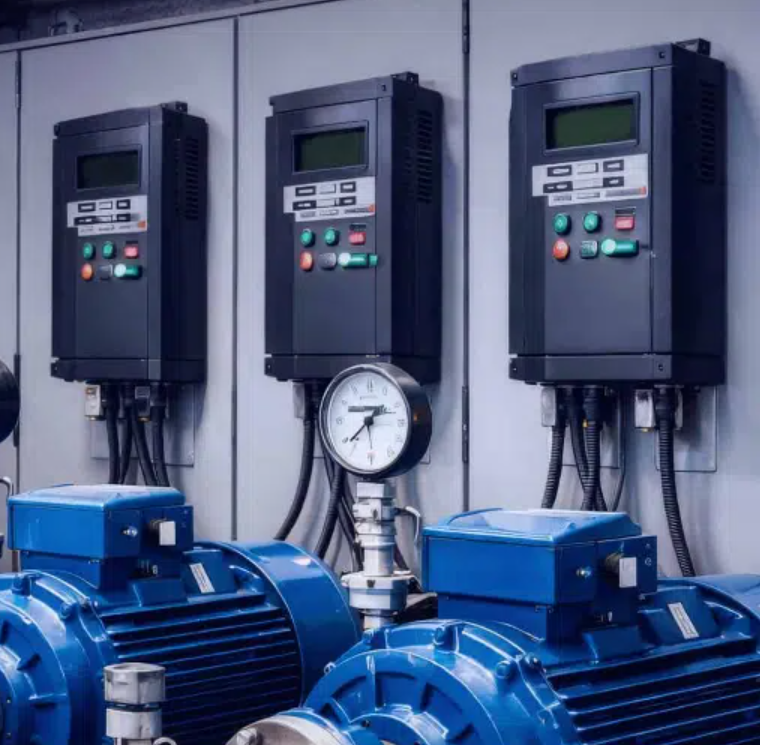
Why VFDs Fail in Industrial Environments: 12 Common Causes
Why Do VFDs Fail in Industrial Environments? ⚠️
A VFD rarely fails “without a reason.”
In most industrial applications, repeated VFD failures are caused by a combination of heat, dust, moisture, electrical stress, poor maintenance, and incorrect application.
Here are 12 common causes:
1️⃣ Excessive temperature
2️⃣ Dust accumulation inside the drive
3️⃣ Poor ventilation or blocked cooling fans
4️⃣ Voltage fluctuations
5️⃣ Input/output phase problems
6️⃣ Motor insulation problems
7️⃣ Overloading and excessive current
8️⃣ Harmonics and poor power quality
9️⃣ Loose or improperly terminated connections
🔟 Aging DC bus capacitors
1️⃣1️⃣ Cooling fan failure
1️⃣2️⃣ Incorrect VFD selection or parameter settings
The important point is this:
Replacing a failed VFD without identifying the root cause can result in the new drive failing again.
At Baiza Automation, we believe in “Repair First, Replace When Necessary.”
A proper VFD diagnosis should go beyond checking whether the drive powers ON.
It should include:
🔹 Fault history analysis
🔹 Power section inspection
🔹 IGBT & rectifier testing
🔹 DC bus measurement
🔹 Control board diagnosis
🔹 Cooling system inspection
🔹 Motor & application checks
🔹 Parameter verification
🔹 Load and running-condition analysis
👉 A failed VFD is often a symptom—not the root cause.
If your VFDs are experiencing repeated failures, overheating, overcurrent trips or unexplained shutdowns, the solution may be better diagnosis and preventive maintenance—not simply replacing the drive.
Keep the industry running. Repair intelligently. Prevent repeat failures.