

VFD Capacitor Reforming: Why Stored Drives Fail Before They Run
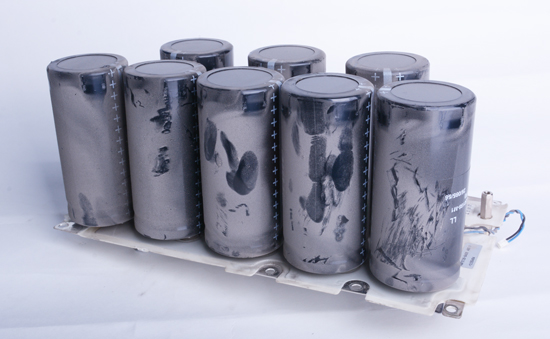
This failure is commonly caused by deteriorated DC bus capacitors. Proper capacitor reforming helps restore the capacitor dielectric layer and prevents sudden failures during startup.
What Is Capacitor Reforming in a VFD?
Inside every VFD, there are large electrolytic capacitors located in the DC bus section. These capacitors store energy and stabilize the DC voltage required for inverter operation.
When a VFD remains unpowered for long periods:
- The oxide dielectric layer inside electrolytic capacitors slowly deteriorates
- Leakage current increases
- Applying full rated voltage suddenly can damage or explode capacitors
- The VFD may trip, fail, or become permanently damaged
Capacitor reforming is the controlled process of gradually rebuilding this oxide layer by applying voltage slowly and safely.
Why Do Stored VFDs Fail?
A common industry mistake is assuming an unused spare drive is always healthy.
In reality:
- Electrolytic capacitors age even without operation
- High temperature and humidity accelerate degradation
- Long storage without power weakens the dielectric insulation
- Instant full-voltage startup creates excessive leakage current
This is why many “unused” drives fail during first startup after years in storage.
Common Symptoms of Capacitor Failure
A stored VFD may show:
- DC Bus Overvoltage Fault
- Precharge Failure
- Input Fuse Blown
- Capacitor Bulging or Leakage
- Smoke During Power-Up
- Instant Trip on Startup
- No Display or Dead Drive
These symptoms are common across major VFD brands including:
- ABB
- Siemens
- Danfoss
- Yaskawa
- Schneider Electric
- Mitsubishi Electric
- Fuji Electric
- Delta Electronics
- Allen-Bradley
- Hitachi
- Parker Hannifin
- KEB Automation
Recommended VFD Storage Guidelines
To improve spare drive reliability:
1. Store in a Controlled Environment
Maintain:
- Low humidity
- Dust-free environment
- Stable temperature
- Proper ventilation
Avoid:
- Direct sunlight
- Condensation
- Chemical exposure
- High vibration areas
2. Power Stored Drives Periodically
Best practice is to energize stored drives every 6 to 12 months using rated input voltage.
This helps:
- Reform electrolytic capacitors
- Reduce leakage current
- Maintain capacitor health
- Verify operational condition
Periodic powering significantly reduces startup failure risk.
General Capacitor Reforming Procedure
Always follow the OEM manual for the specific VFD model.
A general reforming process may include:
| Storage Duration | Recommended Action |
|---|---|
| Less than 1 year | Normal startup usually acceptable |
| 1–2 years | Power drive without motor load for several hours |
| More than 2 years | Perform gradual voltage reforming using variable AC/DC source |
| More than 5 years | Detailed inspection and capacitor health testing recommended |
How Capacitor Reforming Is Performed
Typical reforming involves:
- Isolating the VFD from load
- Using a variable transformer (Variac) or controlled DC supply
- Slowly increasing voltage in stages
- Monitoring:
- Leakage current
- Capacitor temperature
- DC bus voltage stability
- Holding voltage at intermediate levels until current stabilizes
This gradual charging rebuilds the capacitor dielectric layer safely.
Important Safety Notes
Capacitor reforming should only be performed by trained personnel because VFD DC bus sections contain dangerous high voltage even after power removal.
Improper reforming may result in:
- Capacitor explosion
- Electric shock
- Fire hazard
- PCB damage
- Complete drive failure
Always:
- Use insulated tools
- Verify DC bus discharge
- Follow manufacturer instructions
- Use proper PPE
Which VFDs Need Reforming?
Capacitor reforming is relevant for:
- Low voltage VFDs
- Medium voltage drives
- Servo drives
- Soft starters with DC bus capacitors
- CNC spindle drives
- Regenerative drives
Especially important for:
- Critical spare drives
- Shutdown inventory
- Imported old stock
- Long-unused machine panels
Best Industry Practice
Many plants invest lakhs in spare VFD inventory but never maintain those spares.
A better approach is:
- Maintain a spare-drive logbook
- Record manufacturing date
- Track storage duration
- Schedule periodic energization
- Perform annual inspection
- Reform capacitors before emergency installation
A spare drive is only valuable if it starts successfully during breakdown conditions.
Need Help with VFD Capacitor Reforming?
At Baiza Automation, we support industrial customers with:
- VFD inspection
- Capacitor health analysis
- Capacitor reforming
- Preventive maintenance
- Emergency VFD repair
- Testing and trial runs
We support multiple industrial drive brands used across manufacturing plants.
Conclusion
A stored VFD is not maintenance-free. Electrolytic capacitors naturally degrade over time, even without operation. Proper capacitor reforming and periodic energization help prevent sudden failures and protect critical spare inventory.
Ignoring stored-drive maintenance can convert a backup solution into another costly breakdown.
Source inspiration and technical reference adapted from KEB America – VFD Storage and Capacitor Reforming.